Thailand People's Solar Subsidy 2026: 50,000 Baht for 1 Million Homes
Thailand will pay 50,000 baht toward a home solar system for 1 million households. Use the calculator above to check your eligibility, your cost after the subsidy, and your loan instalment — then register before 31 January 2027.
People's Solar Subsidy Calculator
Thailand's People's Solar Project pays 50,000 baht per household toward a home solar system. Enter your vendor quote to see what you pay, what a 7-year state-bank loan costs each month, and roughly when the system pays for itself. Estimate only — not an official approval.
Tap each statement that is true for you. All five green means you look eligible on the published rules — the utility still confirms.
Default 1,100 baht/month is the figure reported by The Nation for the benefit once a loan is repaid. Your real saving depends on daytime use — ask your vendor to estimate it from your bills.
Rules as announced 27 October 2026: register by 31 January 2027 at peoplesolar.mea.or.th (or until 1 million slots fill); tax invoices must be dated from 27 October 2026; request grid connection by 31 August 2027 and complete it by 30 September 2027. Surplus power sells back at 2.20 baht per unit (buy-back from 5 kW, 20-year term). Taking this subsidy means you cannot also claim the 200,000 baht income-tax exemption for home solar, and state-welfare recipients who join waive electricity-bill subsidies for 20 years — read the guide below before you register. If your meter name does not match yours, change it at the utility first.
Overview
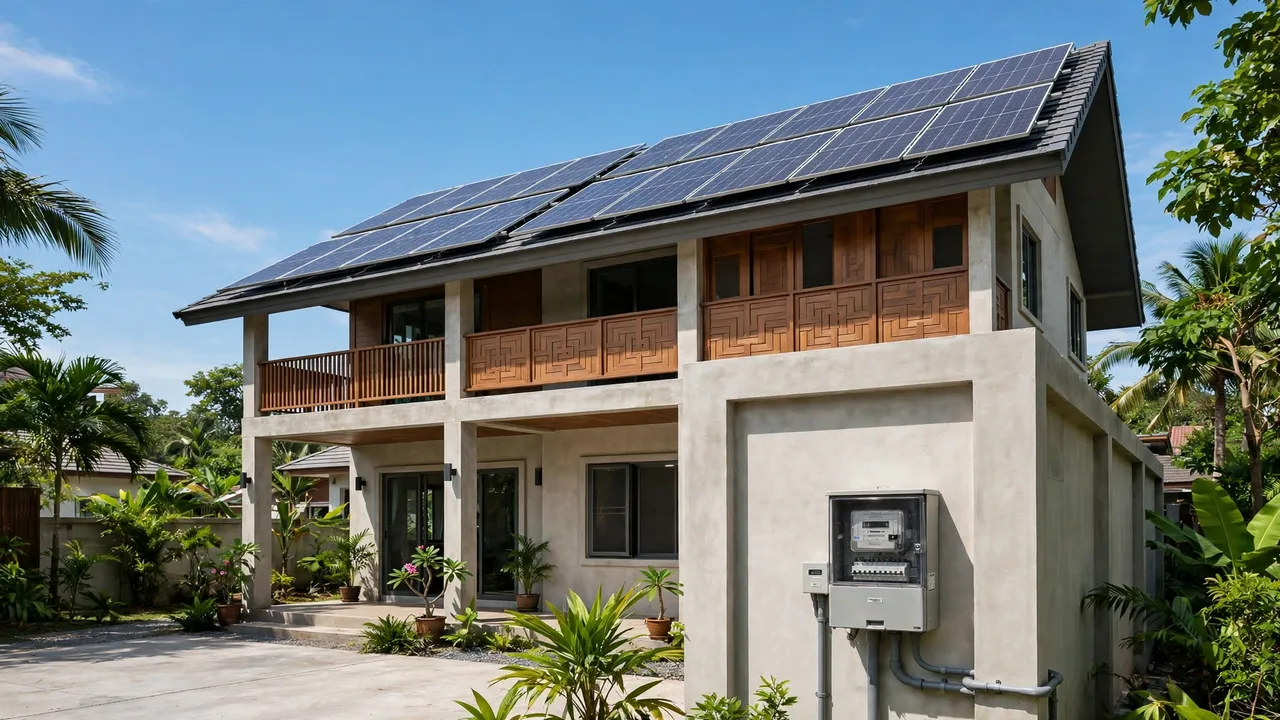
On the afternoon of 27 October 2026, Prime Minister Anutin Charnvirakul stood on a stage at Government House in Bangkok, placed a model solar panel on a mock rooftop, and opened the biggest home-energy offer Thailand has ever made: 50,000 baht toward solar panels for 1 million households, with registration open that same day. It is not a tax break you claim years later and it is not a discount voucher. It is direct support for putting panels on your roof, or on the ground beside your house, and turning your home from a pure electricity buyer into a small power producer that can also sell its surplus back to the grid.
The numbers are simple, and that is the point. The government has set aside 50 billion baht: 50,000 baht times 1 million households. Registration runs from 27 October 2026 to 31 January 2027, or until the 1 million slots are gone — whichever comes first. The systems covered are 5 to 10 kilowatts per meter. You must be a Thai national, on the residential tariff, with your name matching the meter owner name. And the money is not handed over when you register: you install first through an approved route, connect to the grid, and then the support is paid — by 31 December 2027 if every condition is met.
There are two things that make this offer different from the solar schemes that came before it. First, the loan: three state banks will lend for the installation at 2.5 percent a year over 7 years, with no credit-bureau check, the panels themselves as collateral, and instalments collected through your electricity bill. Second, the buy-back: surplus electricity sells back at 2.20 baht per unit under a 20-year arrangement, so a home that produces more than it uses by day earns from the difference instead of wasting it. The government estimates the whole programme will cut household electricity costs by more than 24.5 billion baht a year once it is running.
There are also two traps that will cost careless applicants the whole subsidy, and this guide names them plainly. If your name does not match the meter owner name, fix that at the utility before you register — do not register first and hope. And if you take this subsidy, you give up the 200,000 baht income-tax exemption for home solar, and state-welfare recipients who join give up electricity-bill subsidies for 20 years. Those trade-offs are worth it for many homes and a bad deal for some. Work through the calculator above, read the eligibility guide below, and register only when the maths and the conditions both suit your home.
In-depth guides
Thailand People's Solar 2026: The Complete Guide to Your 50,000 Baht Subsidy
Everything Thai households need to know about the People's Solar Project — the 50,000 baht subsidy, who qualifies, how to register, the loan, selling surplus power, and the deadlines that decide whether you get paid.

People's Solar Registration Steps: MEA and PEA, ThaiD, and the Documents You Need
The step-by-step People's Solar registration walkthrough: check your meter name, register at peoplesolar.mea.or.th, verify with ThaiD, pass the vendor survey, and hit the connection deadlines.
People's Solar Eligibility: The Meter-Name Rule and How to Fix It Before You Register
The People's Solar meter-name rule explained: why your name must match the meter owner, who is excluded, and exactly how to fix a mismatch at MEA or PEA before registration.
People's Solar Loan and Savings Math: What 50,000 Baht Really Does to Your Bill
Worked People's Solar maths: the 50,000 baht subsidy, the 2.5% 7-year loan instalment, the 2.20 baht buy-back, and how many months it takes for a home solar system to pay for itself.
Official portal
People's Solar registration portal (MEA/PEA) ↗📰 Latest updates
Rice farmers' 1,000 baht per rai is landing now — 135,978 households paid, 97,751 still waiting
BAAC paid 1,000 baht per rai to 135,978 rice farmer households on 11 November 2026. Amounts, status checks, and the 97,751 still waiting for the next round.
Thailand's 50,000 Baht Solar Subsidy Is Open: 1 Million Homes, Registration Until 31 January 2027
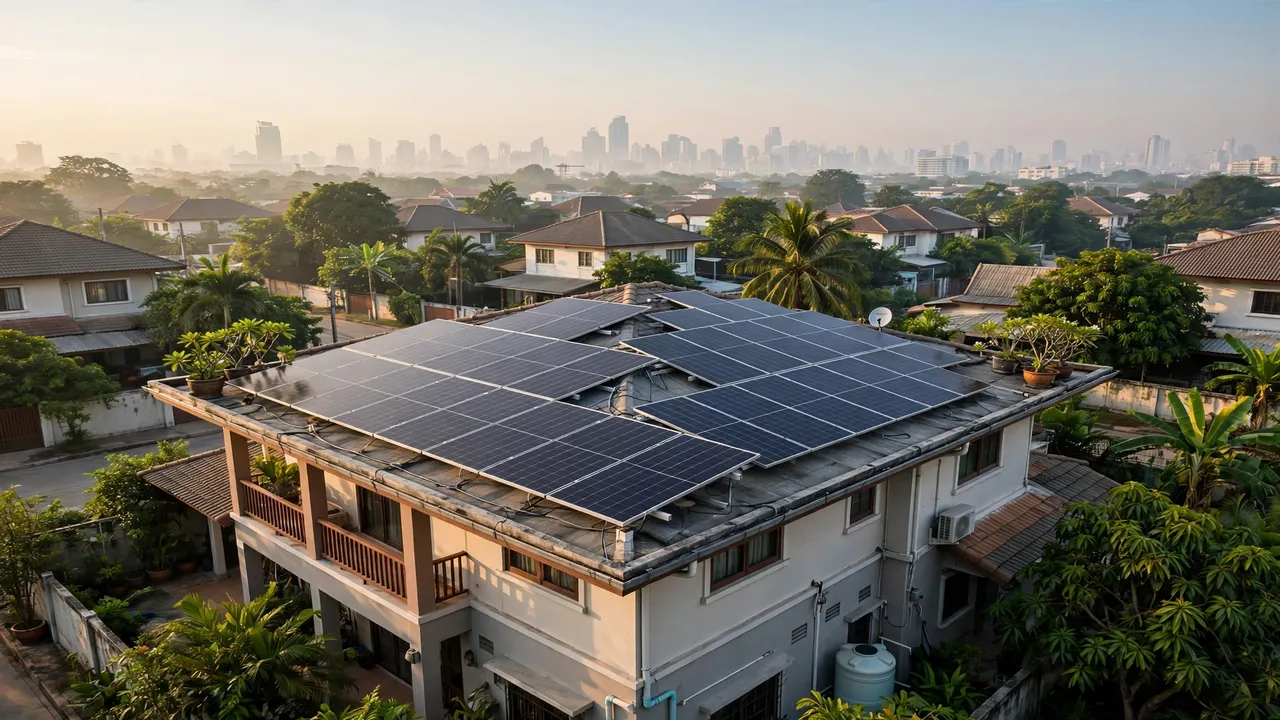
Thailand's People's Solar Project is open: 50,000 baht per household for 1 million homes. Who qualifies, how to register at MEA/PEA, the loan, the deadlines, and the two trade-offs to weigh first.

Flooded but outside the disaster zone? Thailand's GSB has a 3.5% soft loan for SMEs like yours — here's how to get it
GSB soft loan for flood-hit SMEs: 30bn baht, ≤3.50% in years 1–2, ≤5% after. Outside declared disaster zones? Apply with damage proof. Deadline: June 30, 2027.
📰 Sources
Information on this page was compiled from the following sources. Always verify on the official portal.
- ThaiRath — Prime Minister launches People’s Solar Project, 1 million households ↗ (2026-10-27)
- ThaiRath — Registration guide: 50,000 baht support, 27 Oct 2026 – 31 Jan 2027 ↗ (2026-10-27)
- ThaiRath — Register this 27 Oct: subsidy, loans, sell excess power ↗ (2026-10-27)
- Bloomberg Tax — Thai Cabinet approves household solar subsidy, fuel tax cuts ↗ (2026-10-27)
- Malay Mail/AFP — Thailand plans US$1.5b solar subsidy for one million households ↗ (2026-10-26)
- The Nation — Registration opens for solar panel subsidies for a million Thai homes ↗ (2026-10-27)
- list.solar — Thailand People’s Solar Subsidy pays THB 50,000 per home ↗ (2026-10-27)