UPI Vyapaar Saksham Eligibility Checker — Check Yourself
Find out in one minute if your small shop is ready for free QR codes and a free soundbox under the new UPI scheme. No name, no phone number, no documents — just five simple questions.
🏪 UPI Vyapaar Saksham Eligibility Checker — Check Yourself
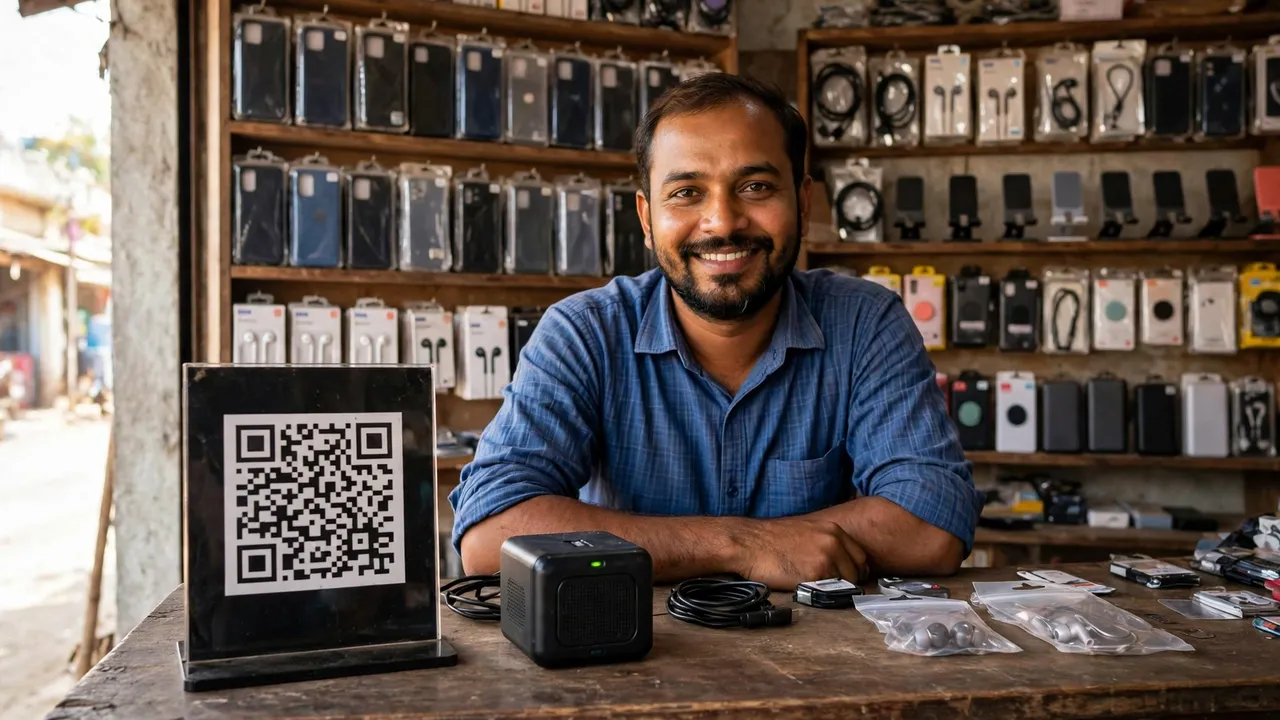
Is your small shop ready for a free QR code and a free soundbox under the new UPI scheme? Answer 5 questions — the result appears right here on your device. We never ask for your name, phone number, documents or any ID.
⚠️ The scheme is announced but NOT live yet. NPCI issued the circular on 11 November 2026, but no start date has been fixed — reports point to a possible January 2027 start. The scheme runs for 3 years from the day UPI MDR is actually implemented. Use this checker to get ready now, and check again when MDR goes live.
Your readiness result
🗓️ UPI Vyapaar Saksham timeline
- 11 Nov 2026 — NPCI circular announces the scheme: Rs 300 per QR code, Rs 750 per soundbox, paid to banks.
- Now (14 Nov 2026) — Scheme announced but not live. No start date fixed; a January 2027 start has been reported but not confirmed.
- Next — UPI MDR goes live (0.4% above Rs 2,000, capped at Rs 300). The scheme starts the same day and runs for 3 years.
- Then — Banks onboard small shops with free QR codes and soundboxes; the usage test (25 payments, Rs 5,000 a month) decides the rewards.
📰 Where we got this news: the scheme was reported by ET BFSI (12 Nov 2026), ETV Bharat (13 Nov 2026), IBTimes (13 Nov 2026), StartupFeed and eLets BFSI, all reporting on NPCI's circular of 11 November 2026. This page is an independent guide, not an NPCI or government website.
Readiness check only, not a decision. Only your bank can confirm whether your shop is onboarded under the scheme once it goes live. Never pay anyone for a QR code or soundbox under this scheme, and never share your UPI PIN or any OTP with anyone who contacts you about it. This tool runs entirely on your device and collects no data.
Overview
On 11 November 2026, the National Payments Corporation of India (NPCI) issued a circular for a brand-new scheme called the UPI Vyapaar Saksham Scheme. Its goal is simple and ambitious: bring crores of small shopkeepers — kirana stores, tea stalls, vegetable vendors, tailors, repair shops and street vendors — fully into digital payments. The scheme aims to add up to 1 crore new QR codes every year, so that even the smallest shop in the smallest town can accept UPI without worrying about cost or paperwork.
Here is the twist most headlines miss: the money does not go to the shopkeeper. It goes to the bank or payment company that gives the shop its QR code or soundbox. For every new QR code, the bank gets Rs 300. For every soundbox, it gets Rs 750. The shop pays nothing for either. The money comes from a fund equal to 5 percent of UPI MDR — the fee merchants pay on large UPI payments — and it is split three ways: 30 percent for onboarding new merchants, 50 percent for growth in UPI usage, and 20 percent for extra growth in the priority towns and regions. In plain words, the scheme pays banks to reach small shops, so small shops get the tools free.
Who can benefit? The scheme is built for genuinely small businesses. Your shop must have had an annual turnover of up to Rs 40 lakh in the previous financial year. The focus is on Tier 3 to Tier 6 centres — smaller towns and rural areas — plus the North-East states, Jammu and Kashmir, and Ladakh. Two well-known groups are named in the scheme: beneficiaries of PM SVANidhi, the street-vendor loan scheme, and PM Vishwakarma, the scheme for traditional artisans and craftspeople. If you are in one of those groups, you are already inside the circle the scheme is drawn around.
Getting a free QR code is only the first step — the scheme also checks that the shop actually uses UPI. Every quarter, your shop must cross two lines: at least 25 eligible UPI transactions in at least 2 of the 3 months, and at least Rs 5,000 of UPI value every month. Only payments of Rs 2,000 or less count. Reversed, refunded or cancelled payments do not count, and splitting one bill into small pieces to fake the count is banned. Take a kirana shop in a small town: if 30 customers pay by UPI in a month, most paying Rs 100 to Rs 500 for daily goods, the shop clears both tests easily. But if the same shop takes only 10 UPI payments a month, it fails the test even though its turnover is small.
One honest warning, as of 14 November 2026: the scheme is announced, but it is NOT live yet, and no start date has been fixed. The first date talked about was 15 October 2026, but the launch was deferred past Diwali, and reports now point to a possible January 2027 start. The scheme will run for 3 years from the day UPI MDR is actually implemented, and NPCI will review it every 6 months. So what should a shopkeeper do now? Keep accepting UPI, try to cross 25 payments and Rs 5,000 every month, and ask your bank when it will start giving QR codes and soundboxes under this scheme. Use the checker on this page to see where you stand today — and check again when MDR goes live, because that is when the scheme truly begins.
In-depth guides
Official portal
NPCI — Official Website ↗📰 Latest updates
India: Haryana Lado Lakshmi 13th instalment — ₹2,100 paid to 10.59 lakh women on 6 November 2026
Haryana paid the 13th Lado Lakshmi instalment on 6 November 2026: ₹222.52 crore to 10.59 lakh women. Who gets ₹2,100 a month and how to check your payment.
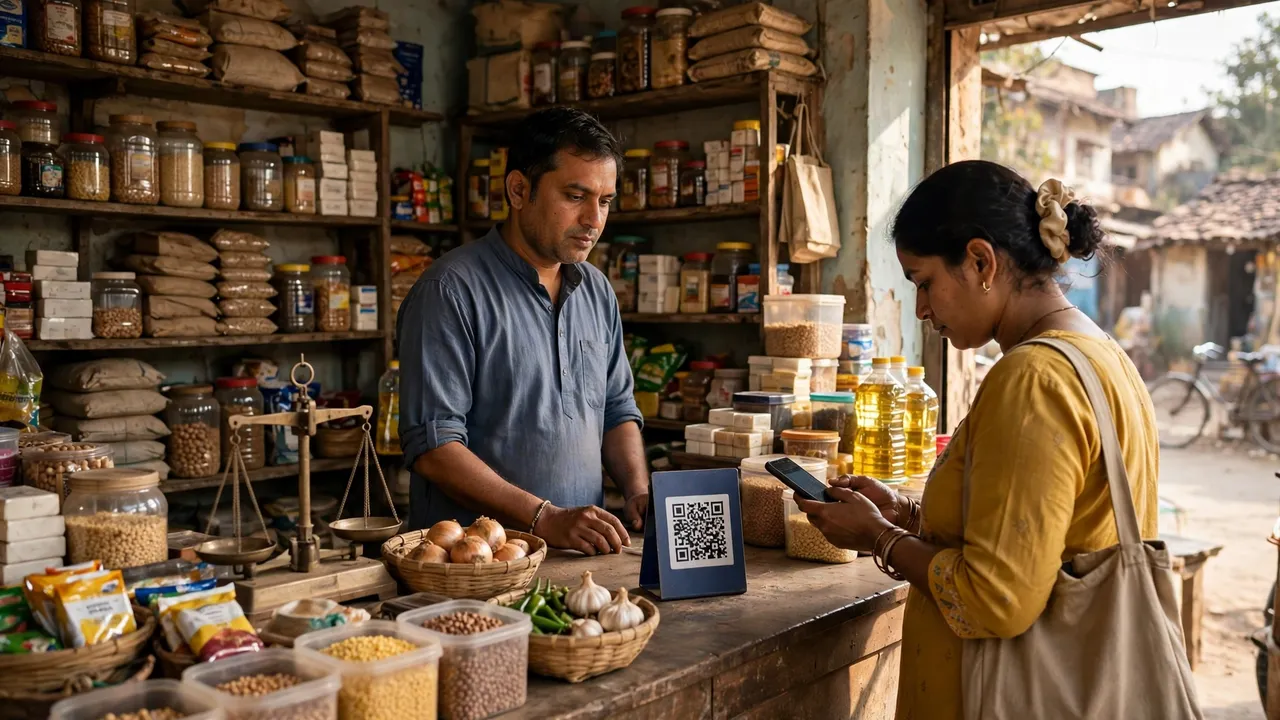
India: UPI Will Now Pay Banks to Put QR Codes in Small Shops — Here's What It Means for You
NPCI's UPI Vyapaar Saksham scheme pays banks Rs 300 per QR code and Rs 750 per soundbox for small merchants. Who qualifies, the usage test, and what stays free.
DAP stays at ₹1,350 as Cabinet clears ₹62,370 crore fertiliser subsidy for Rabi 2026–27
Cabinet approved a ₹62,370 crore fertiliser subsidy for Rabi 2026–27 on 11 Nov 2026. DAP stays at ₹1,350 a bag. Rates, stocks and Mudra extension explained.
📰 Sources
Information on this page was compiled from the following sources. Always verify on the official portal.
- ET BFSI — NPCI introduces UPI Vyapaar Saksham Scheme ↗ (2026-11-12)
- ETV Bharat — New UPI scheme to benefit small merchants ↗ (2026-11-13)
- IBTimes — UPI new charges: NPCI offers Rs 300 for QR codes, Rs 750 for soundboxes ↗ (2026-11-13)
- StartupFeed — UPI Vyapaar Saksham Scheme: QR, soundbox incentives ↗ (2026-11-13)
- eLets BFSI — UPI Vyapaar Saksham ↗ (2026-11-13)