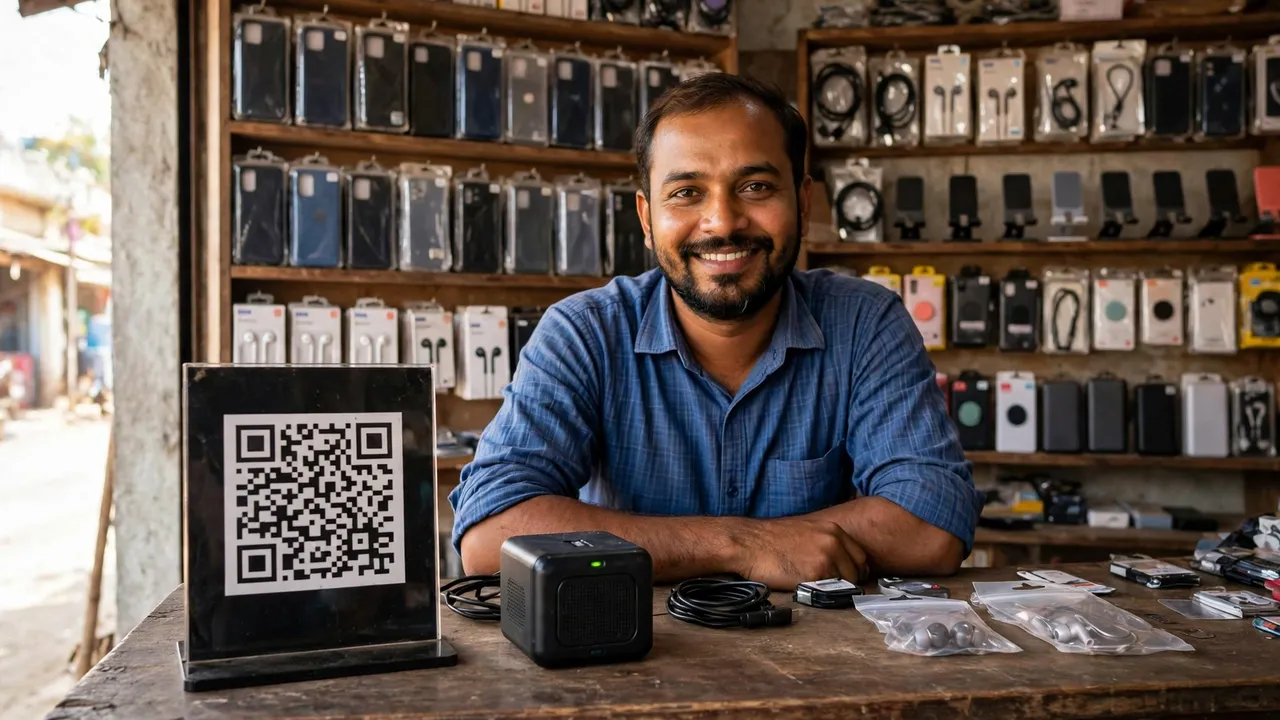
A free QR code is only useful if customers actually pay through it — so the UPI Vyapaar Saksham Scheme sets a usage test. Two numbers decide whether your shop passes: 25 transactions and Rs 5,000. This short guide explains both, with worked examples from real small shops.
The test runs every quarter, which is 3 months. You do not need a perfect month every month — you need 2 good months out of 3, plus the monthly value line every month. Here is exactly how it works.
Test 1: 25 eligible transactions in 2 of 3 months
In each quarter, your shop must record at least 25 eligible UPI transactions in at least 2 of the 3 months. A quarter could look like this: 30 payments in month one, 12 in month two, 28 in month three. That passes — two months crossed 25. But 40 payments in month one and only 10 in each of the other two months fails, because only one month crossed the line.
Test 2: Rs 5,000 of UPI value every month
Separately, your shop must receive at least Rs 5,000 of UPI payments in every month of the quarter. This is about value, not count. Twenty-five payments of Rs 20 each would pass the count test but add up to only Rs 500 — and fail the value test. You need both: enough payments and enough total value.
Which payments count — and which do not
Only eligible transactions count, and eligible means Rs 2,000 or less per payment. A Rs 500 grocery payment counts. A Rs 5,000 payment does not count towards the 25. Reversed, refunded or cancelled payments never count. And bill-splitting — breaking one bill into several small payments to inflate the count — is banned.
Worked example: a kirana shop that passes
Take a kirana shop in a Tier 4 town. In a month, 45 customers pay by UPI: 30 pay between Rs 100 and Rs 500, 12 pay between Rs 500 and Rs 1,500, and 3 pay Rs 3,000 each. The eligible count is 42, well above 25. The total UPI value is about Rs 22,000, well above Rs 5,000. This shop passes both tests easily. Now take a tailor who takes only 15 UPI payments a month, even though each is Rs 800: the value is Rs 12,000, which passes, but the count is 15, which fails. That tailor needs 10 more UPI customers a month — one more paying customer every three days.