
Every morning at 6:30, Margaret Njoroge packs a small plastic container with cold ugali for her eight-year-old son Brian. By lunchtime it is hard and dry. "He eats it because he must," she says, walking him to their public primary school in Kiambu. "But I see his face."
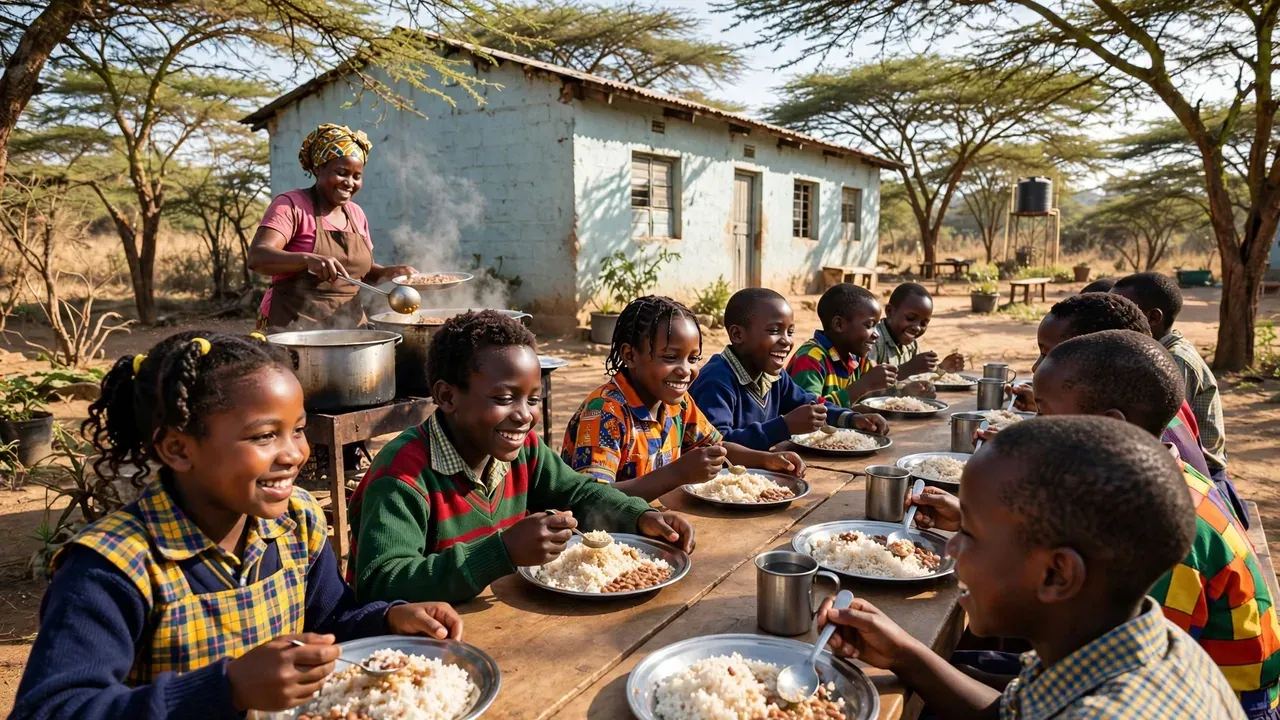
From January 2027, Brian will eat a hot lunch at school — free, every school day. Kenya’s National School Meals Programme is going nationwide across all 47 counties, and for mothers like Margaret, it changes everything.
What the programme actually promises
The government announced on September 30, 2026 that the school meals programme will cover all 47 counties from the first term of 2027. It starts from 2.6 million learners and scales toward an extraordinary 10 million by 2030.
For parents, the key detail is simple: the meals are free. No contribution, no hidden cost. The programme is government-funded, and public primary schools are the first priority.
Why Margaret stopped worrying about lunch
Margaret earns a living selling vegetables at the Kiambu market. On a good day she makes 400 shillings. A proper packed lunch for Brian — chapati, beans, fruit — would cost nearly half of that.
"Now that money stays," she says. "Maybe I can save for his uniform." Researchers have found that school meals do more than fill stomachs: attendance rises, concentration improves, and girls especially stay in school longer.
Is your child’s school included?
The question every parent is asking: is MY school in the first phase? The framework covers all 47 counties, but the county-by-county rollout order is still being finalised by the Ministry of Education.
The checker at the top of this page helps you assess your situation based on your county and school type. Public primary schools are the clear priority for January 2027.
What to do before January
Margaret’s advice to other parents: make sure your child is enrolled for the 2027 school year, keep your documents ready, and ask your school’s headteacher whether they have received the meals programme circular.
And bookmark this page — we will update it as the county rollout details are announced. This is an independent guide; always confirm with your school or the Ministry of Education.