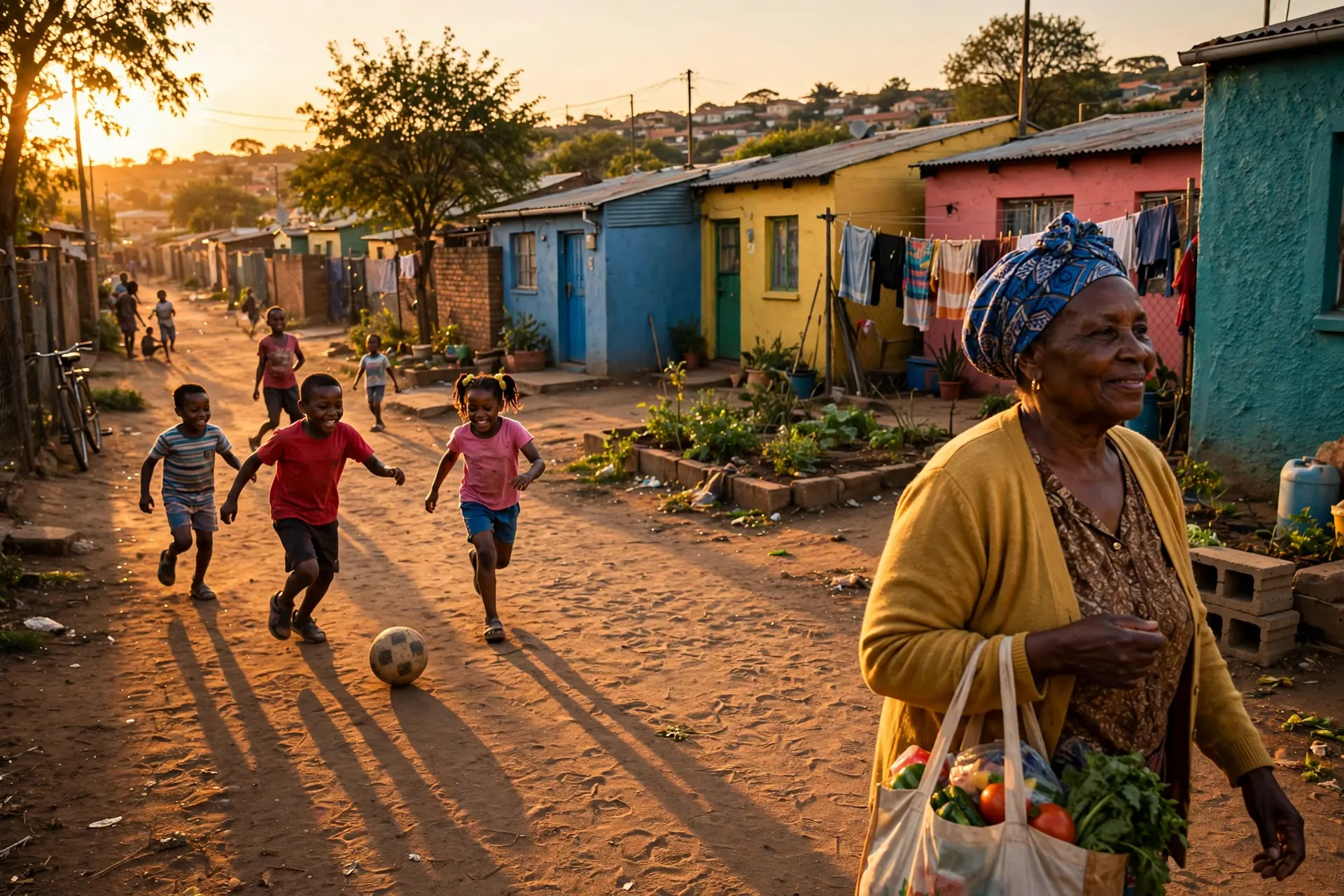
Sipho is 34, lives in Soweto, and has not had steady work since the warehouse contract ended last year. When he heard the SRD grant had gone up from R350 to R370, he did quick maths on his phone: R370 is a 10kg bag of maize meal, cooking oil, and taxi fare to the clinic. Not luxury — survival. But when his application came back 'declined' for a reason he could not understand, he did what millions of South Africans do every month: he refreshed his status page, asked his neighbours, and worried.
If Sipho's story sounds like yours, this guide is for you. It covers the whole SRD grant in plain English — how much it pays, who qualifies, the famous R624 means test, when the money actually lands in your account, and what to do if SASSA says no. Read it in ten minutes and you will know exactly where you stand. One note before we start: this is an independent guide, not a government website. We never ask for your ID number, and neither should any site that claims to 'help' you check your status. Everything here is based on SASSA's own published rules, explained the way a friend would explain them.
Is the SRD grant really R370 now?
Yes. The Social Relief of Distress (SRD) grant now pays R370 per month, raised from the original R350. That is the figure SASSA itself uses on its official SRD portal at srd.sassa.gov.za, and it is the number every calculation in this guide is built on. If you still see R350 quoted on old Facebook posts or WhatsApp forwards, those are simply out of date — R370 is the current amount.
The grant is confirmed funded until March 2028 — the MTBPS of 21 October 2026 extended it in its current form to March 2028. That date matters: it means the R370 payments will continue at least until the end of March 2028, after which the National Treasury decides whether the grant continues, changes, or ends. Nobody — not SASSA's call centre, not a news outlet, and certainly not a stranger on WhatsApp — can tell you what happens after that date yet. Treat anyone who 'guarantees' the grant forever, or tells you it ends tomorrow, as noise.
Do I actually qualify? The rules that decide it
SASSA checks several things every single month, and every one of them must hold at the same time. You must be a South African citizen, permanent resident, refugee, asylum seeker, or special-permit holder; aged between 18 and 59; unemployed; and your total bank deposits must be R624 or less in the month. You must also not be receiving another SASSA grant for yourself, not be on UIF, not be funded by NSFAS, and not be living in a government-funded institution like a prison or state hospital. Remember, SASSA checks all of these conditions fresh every month, so staying qualified is an ongoing habit, not a once-off event.
Two of these trip people up most. First, the means test counts all deposits — not your salary. A R700 transfer from your sister counts the same as R700 of wages, and it fails the R624 limit all by itself. Second, a child support grant for your child does not disqualify you; only a grant in your own name does. If you read that list and ticked every box, you are in the right place — and our free checker on the main SRD page walks you through it in under two minutes.
When will my R370 actually arrive?
Here is the part that causes the most anxiety: the SRD grant is paid last, in batches, during the final week of each month. There is no single SRD payday. If your neighbour gets her old-age grant on the 4th and you are still waiting on the 24th, that is normal — the SRD batches run after all the other grants. Your exact payment date only ever appears under 'Application Status' on your own page at srd.sassa.gov.za.
South African outlets have reported these pay windows — the October window (26–30 October 2026) has closed; the coming months are 24–30 November 2026, 23–30 December 2026, 25–29 January 2027, 22–26 February 2027, and 24–31 March 2027. These are reported dates, not official SASSA announcements, so treat them as a rough window for when to watch your account — then confirm your own exact date on your status page. Never trust a 'pay date' posted on social media over what your own status page says.
Declined? Do not panic — appeal for free
A decline is not the end of the road; it is the start of the appeal process. The most common reasons are: bank deposits above R624 (even a once-off family transfer), being registered for UIF, being NSFAS-funded, your ID details not matching Home Affairs records, receiving another grant, or being outside the 18–59 age range. If you believe SASSA got it wrong, you can appeal — and the appeal costs nothing.
Here is exactly how: go to srd.sassa.gov.za/appeals (or tap 'Lodge an Appeal' on the SRD site), enter your ID number and the cellphone number on your application, and use the OTP PIN they send you. Select the month you were declined for — appeals are per month, so each declined month needs its own appeal — choose the reason that matches your situation, write a short honest motivation, and submit. The appeal is decided by the Independent Tribunal for Social Assistance Appeals (ITSAA), which is independent of SASSA. Take your time choosing the right reason — a wrong choice can slow the decision down. And remember: never pay anyone to appeal for you. Anyone asking for money is running a scam.
How do I check my status without getting scammed?
Use only the official channels. The website is srd.sassa.gov.za — tap 'Check Status' and enter your ID and cellphone number. On WhatsApp, message 082 046 8553 and send the word 'Status' (it is zero-rated, so it costs no data). Or call the SASSA call centre on 0800 60 10 11, Monday to Friday between 08:00 and 16:00. Those three channels are the only ones SASSA runs.
Everything else should raise your guard. SASSA will never ask you for money to 'release' your payment, never ask for your bank PIN or OTP over the phone, and never process your application through a random Facebook page or a stranger's WhatsApp number. Sipho learned this the hard way when a 'helper' in his street offered to 'fix' his decline for R150 — he walked away, filed his own free appeal at srd.sassa.gov.za/appeals, and got his answer. Your status, your money, your appeal — all free, all through the official channels.
One bad month does not end your grant
SASSA re-checks you every single month against bank and Home Affairs records. A month where your deposits pass R624 fails only that month — it does not cancel your grant forever.
You have two free options: appeal that declined month at srd.sassa.gov.za/appeals, or keep your deposits under R624 and let the next month's fresh check pass. Never pay anyone for either — both are free.
How to apply for the first time, step by step
Go to srd.sassa.gov.za and check the address ends in .gov.za before you type anything. Choose your applicant type — South African ID holders, or asylum seekers and special-permit holders — then enter the cellphone number on your application and the one-time PIN sent to that number. Fill in your personal details exactly as they appear on your ID, answer the questions about your work and income honestly, read and accept the declaration and consent, choose how you want to be paid, and submit. Applying costs nothing, and you should keep the confirmation message you receive.
You will need three things ready: your 13-digit ID number, a cellphone number registered in your own name, and a bank account in your own name — or a cellphone number registered in your own name for a cash-send payment. New applicants are also asked to complete a facial biometric check before approval: SASSA sends a verification link by SMS, you open it on a phone with a front-facing camera, and you follow the on-screen prompts in good light. If your status later shows as referred, or as approved but not paid, request a verification link on the portal and complete the same check; if it keeps failing, visit a SASSA office with your ID.
What your status words actually mean — and two decline reasons people miss
Pending means the monthly check is not finished yet — SASSA is still verifying your details against Home Affairs, bank, UIF, NSFAS and SARS records — so check again in a few days rather than reapplying. Approved but no pay date means your batch has not been processed yet, or a facial verification step is still outstanding; check your status page again and complete any verification link SASSA has sent. Declined means that month only, and it is the one status that needs action: appeal it, do not just wait for the next month.
Appeal promptly — ideally within 30 days of the decline, and never later than 90 days — with a separate appeal for each declined month at srd.sassa.gov.za/appeals. The Independent Tribunal for Social Assistance Appeals endeavours to decide appeals within 60 to 90 days, but that is not a guaranteed decision date, so keep checking your status page. Two reasons catch people who thought they qualified: appearing on a government payroll, even for work that has ended, and a self-exclusionary answer — telling the application you have other support above the threshold. If either no longer applies to you, say so plainly in your appeal motivation, with the proof for that month.
This month: the November pay window is running
As of 1 November 2026, the reported October pay window (26–30 October) has closed. The next window to watch is November: 24–30 November 2026, as reported. SRD pays last, in batches, so your exact date appears only on your own status page at srd.sassa.gov.za.
Check your status page now rather than trusting a pay date posted on social media — and remember these windows are reported dates, not official SASSA announcements. The next reported window to watch is 24-30 November 2026, and once your batch is processed, allow a few days for the money to reflect in your bank account.