
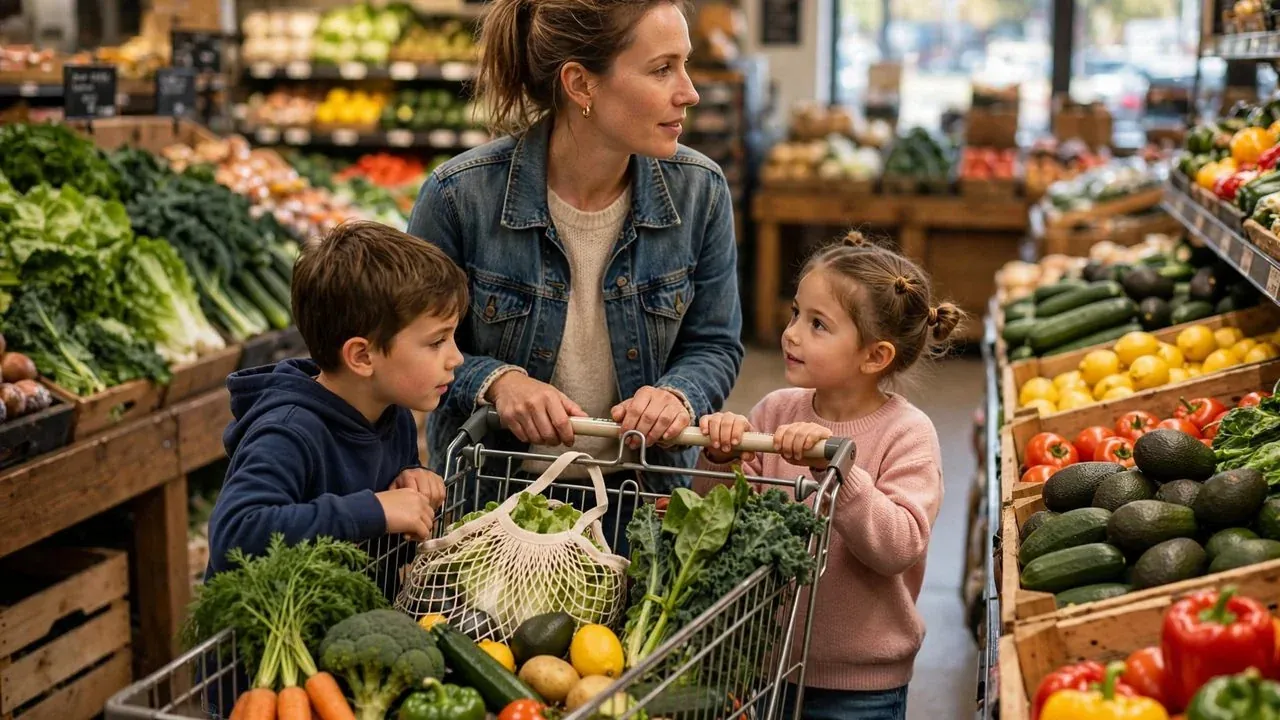
Maria Gonzalez is 34, works in a school cafeteria in El Paso, Texas, and raises two kids — which makes her a household of three in SNAP terms, a phrase she learned the way everyone learns it: standing in a government office with a folder of pay stubs. Twice a month she does the same quiet arithmetic at the checkout: milk, eggs, rice, beans, whatever produce is marked down, all measured against a budget that never quite stretches far enough. Her youngest has started noticing when the cart gets light near the end of the month. On October 1, 2026, Maria’s math changed. SNAP entered a new fiscal year with higher benefit amounts, wider income limits — and the biggest funding shake-up in the program’s modern history.
This guide covers all three: the new amounts in plain tables, how your own benefit is actually calculated (the famous 30% rule, demystified), and what the funding overhaul could mean for you down the line. And because the arithmetic is fiddly — it genuinely is — there is a free estimator at the top of this page: enter your household size and income and it does the ballpark figuring for you. (We are an independent guide, not the government. Benefit rules are federal, but always confirm your situation with your state agency.)
The new amounts, from October 1, 2026
First, the headline numbers — the maximum monthly allotments for the 48 states plus DC. One person: $306. Two: $562. Three — Maria’s household: $808. Four: $1,023. Each additional person adds $225. Alaska, Hawaii, and the territories run on separate, higher schedules that reflect their higher food costs.
The income doors opened wider too. Gross monthly income limits are now $1,729 for one person, $2,345 for two, $2,961 for three, and $3,575 for four — so households that earned slightly too much last year may qualify this year. But gross income is only the doorway. Your net income, after deductions, is what ultimately decides your benefit — which brings us to the calculation.
How your benefit is actually worked out
The idea is simple, even if the arithmetic is not: SNAP expects a household to contribute about 30% of its net income toward food. So your monthly allotment equals the maximum allotment for your household size, minus 30% of your net income. That is the whole formula. Everything else is figuring out what “net income” means.
Net income is your gross income minus a set of deductions: the 20% earnings deduction (a straight reward for working), the $217 standard deduction, excess shelter costs up to $789, medical expenses over $35 a month for elderly or disabled members, and dependent-care costs like childcare. These deductions are why two households with the same pay can get very different benefits — Maria’s childcare costs, for example, lower her countable income and raise her allotment.
Doing this by hand is genuinely fiddly, which is exactly why the estimator exists. Enter your household size and income above and it walks through the ballpark math for you — then treat the result as orientation, not a ruling, because your state agency makes the final call.
The funding overhaul behind the scenes
Now for the part that made policy headlines — and the part worth watching even though it does not change your check today. From October 1, 2026, states pay 75% of SNAP administrative costs, up from the old 50/50 split. That shift saves the federal budget roughly $3.4 billion a year — and moves a serious cost onto state ledgers.
From October 2027, the pressure grows further: states with payment error rates at or above 6% must also start sharing food-benefit costs themselves. Large states like California and New York could each owe over $1 billion a year under that rule. States now have much more skin in the game — which means stronger incentives to run the program tightly, and a very good reason for recipients to keep an eye on how their own state administers it.
What does this mean for you, practically? Benefit amounts are set at the federal level, and they rose for FY2027 — that part is settled. But administration is local, and local budgets are now under new strain. Keep your paperwork current, report changes on time, and do not give your state agency a reason to slow your case down.
How to apply — simply and safely
Applying goes through your state’s SNAP agency — online, by mail, or in person, whichever you prefer. You will need ID, proof of income, your rent or mortgage costs, and utility bills. If you are approved, benefits arrive on an EBT card you can use at grocery stores and farmers markets, just like a debit card. Current recipients should see the new FY2027 amounts applied automatically — no need to reapply.
One firm rule, and it is non-negotiable: never pay anyone to “help” you apply. Applying for SNAP is free — always has been. Anyone charging you a fee, asking for your EBT PIN, or texting you about “verifying” your benefits is not on your side. The minimum benefit, for the record, is $25 a month for qualifying one- and two-person households — small, but real.