
The DOLE Sagip-Trabaho Program is generous — up to ninety days of a mandated wage increase, paid by the government — but it is not for everyone. It is built for one kind of employer: a small business that is genuinely struggling to pay a wage hike the law requires, and that can prove it. If that sounds like your business, this guide will help you check each test in turn.
There are five tests, and you need to pass all of them: you must be an MSME, you must be in financial distress over the wage increase, you must have no more than thirty-five registered workers, you must be in Metro Manila or Central Visayas, and you must be able to prove all of it with documents. Miss one, and the application fails. This guide explains each test, and who is left out.
The MSME test
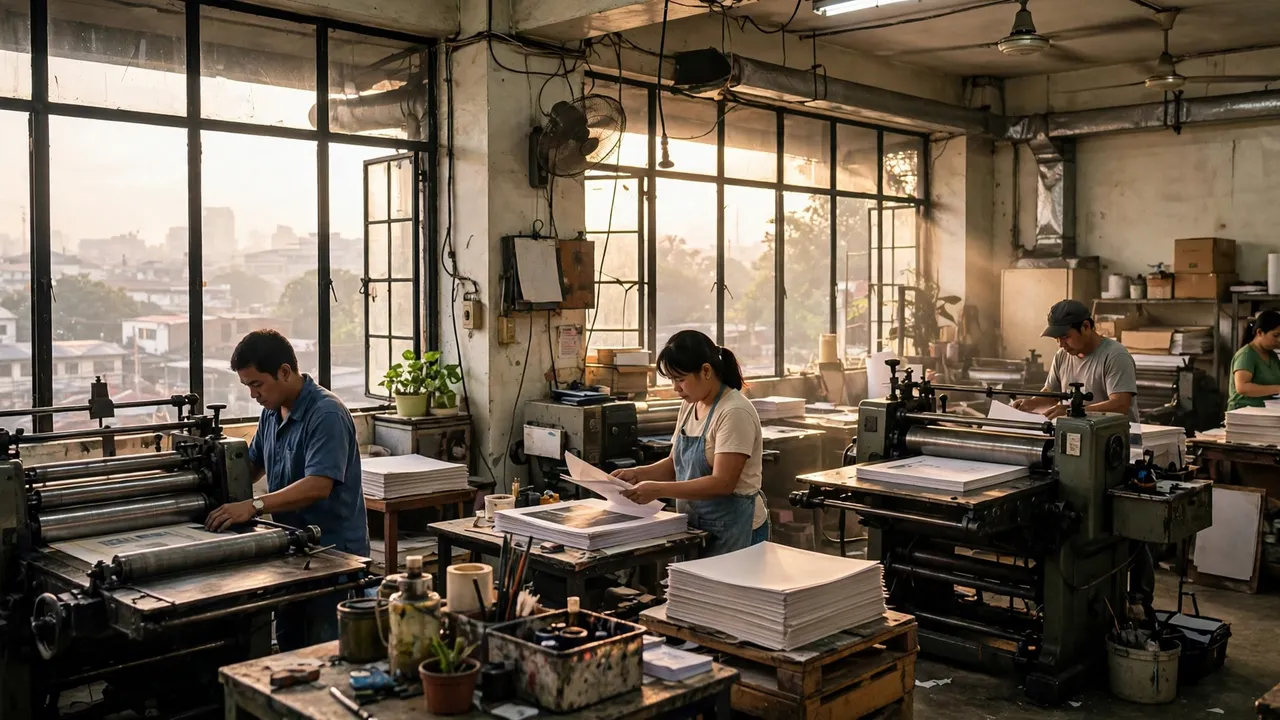
Sagip-Trabaho is for micro, small and medium enterprises. These are the businesses that feel a wage hike first and hardest: the printing shop, the bakery, the small garment workshop, the neighbourhood factory. Valenzuela City, where the program launched, hosts around fifteen thousand factories and business establishments, about ninety percent of them MSMEs — which is why the launch happened there. Large companies are not the target. A business with deep reserves and a finance department is expected to absorb a wage increase itself. If your business is genuinely small and the increase genuinely hurts, you are in the right place.
The 35 registered-worker limit
The program covers employers with up to thirty-five registered workers. Thirty-five qualifies; thirty-six does not. The word registered is doing real work here: DOLE counts the workers on your books, the ones whose SSS, PhilHealth, Pag-IBIG and ECC contributions you are paying. Off-the-books workers do not count toward the limit, and they are not covered by the subsidy either. The first beneficiary illustrates the rule: Mega-Jesta Prints has about sixty workers, and the aid helps pay about half of them — consistent with a program that covers workers up to its limits rather than an entire larger payroll. If your workforce is near the ceiling, ask your DOLE field office exactly which workers can be covered before you apply.
Proving financial distress
This is the test that decides most applications. It is not enough to feel squeezed; you must show it, through a Job Preservation and Business Continuity Plan — the JPBCP — prepared in DOLE's format. The plan must demonstrate financial distress and set out how the business will keep operating: expected orders, costs being cut, a realistic path to paying the full wage once the ninety days end. Useful evidence includes the wage bill before and after the increase, recent revenues and costs, and the pressures squeezing the business — rising fuel prices, weak exports, lost orders. Keep every figure consistent with your tax and benefit records. A business that is doing well and simply prefers not to pay the increase will not pass this test, and that is by design: public money should go to businesses that need it.
The two regions
Sagip-Trabaho was initially implemented in Metro Manila and Central Visayas. The Metro Manila rollout took place on 5 November 2026 in Valenzuela City, and the program was piloted at the DOLE CAMANAVA Field Office with thirteen partner employers and more than two hundred covered workers. Central Visayas is covered because its new minimum wage rates took effect on 14 October 2026 — a forty-two peso daily increase for private-sector workers and five hundred pesos a month more for kasambahays. No wider rollout has been announced yet, as of 11 November 2026. If your business is outside these two regions, you do not qualify yet, and you should watch DOLE announcements for any expansion.
Who is NOT covered
A clear-eyed list helps employers avoid wasted applications. Large employers with more than thirty-five registered workers are not covered. Businesses outside Metro Manila and Central Visayas are not covered yet. Businesses that cannot prove financial distress are not covered. Businesses that are not paying their workers' SSS, PhilHealth, Pag-IBIG and ECC benefits, or that cannot prove their legitimacy, will struggle to pass assessment. And workers who are not registered — informal or off-the-books workers — are not covered by the subsidy. If any of these describes your situation, fix what can be fixed — register your workers, bring benefits current — and check again when DOLE announces more detail.