Suraksha just got bigger: hearing aids, cancer scans and more
Published: 2026-10-21 · Via: Daily News (Sri Lanka)
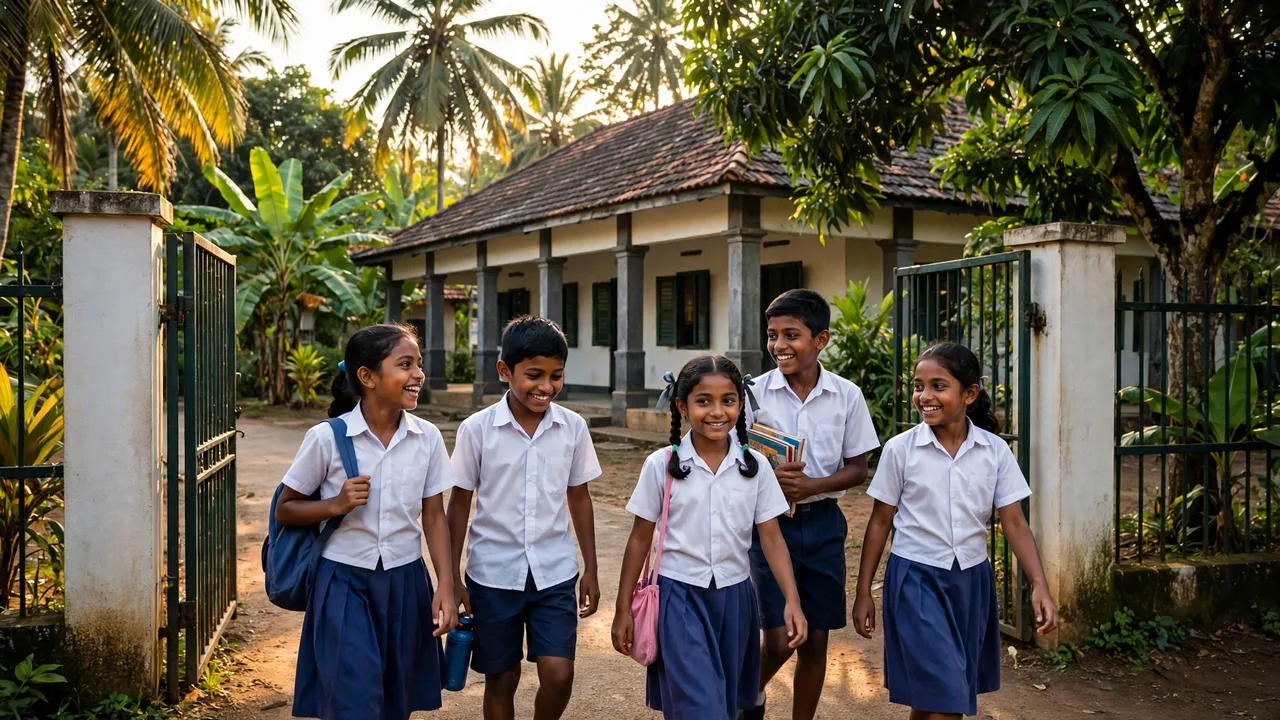
If you have a child in school in Sri Lanka, the government already insures them for free — and under the revised agreement, that insurance covers significantly more. On Monday (19 October) the Cabinet approved a revised agreement between the Education Ministry and the Sri Lanka Insurance Corporation extending the Suraksha Student Insurance Programme for another full year, 1 September 2026 to 31 August 2027, with several new benefits added. The decision was announced at Tuesday's post-Cabinet briefing by spokesman Dr. Nalinda Jayatissa, on a proposal by Prime Minister Harini Amarasuriya in her capacity as Education Minister (Daily News).
What is Suraksha, exactly?
Many parents have heard the name but never seen the details. Suraksha is a free insurance scheme for over four million schoolchildren — ages 5 to 21 in Grades 1 to 13 at government schools, government-approved private schools and Pirivenas, plus ages 4 to 21 at assisted special schools. It is provided at no cost through the Sri Lanka Insurance Corporation General, with claims handled via its islandwide branch network. The standing cover already includes in-patient treatment up to Rs 300,000, out-patient care up to Rs 20,000, critical-illness benefits starting from Rs 1,500,000, and accident cover — Rs 200,000 for total permanent disability, Rs 150,000 for partial disability and Rs 25,000 to Rs 100,000 for temporary incapacity (The Sunday Times). Children from families earning under Rs 180,000 a year, and children in Aswesuma families, also carry a Rs 75,000 benefit on the death of a parent or legal guardian.
What is new under the revised agreement
The revised agreement adds five things parents should know. First, students can now claim up to Rs 75,000 for the repair of hearing accessories plus related service charges — the first time hearing support has been spelled out this clearly. Second, up to Rs 20,000 for long-term medication for chronic kidney disease and chronic inflammatory arthritis. Third, up to Rs 20,000 for screening tests: skin-cancer malignancy screening, post-transplant lymphoproliferative disorder (PTLD), osteoporosis, and Hepatitis B, Hepatitis C and HIV screening.
Fourth, the critical-illness category "Cancer Treatment" becomes "Cancer Treatment and related Testing" — which now explicitly covers PET scans and major hip, shoulder and knee joint-replacement surgeries needed after sudden accidents. Fifth, a Rs 100,000 payment under the accidental category if a student dies in a sudden accident during activities organised by Education Ministry institutions under proper supervision — school trips, excursions and sports meets, whether inside or outside the school.
How do claims actually work?
This is the part the wire reports never explain. Suraksha claims go through the Sri Lanka Insurance Corporation General — its 200 branches and customer service centres handle the paperwork, not the school office alone. Keep every medical bill, discharge summary and receipt from day one; for accident claims, the incident report from the school or the supervising authority matters as much as the hospital papers. Critical-illness and disability claims need the specialist's diagnosis on record.
The 90-day deadline and the principal signature — the two things that decide most claims
The claims paragraph above tells you where claims go, but it leaves out the two requirements that decide whether a claim is even accepted. First, the deadline: all physical claim documents must reach the SLIC head office or any branch within 90 days of the date of the incident, and outstanding claims at the end of the policy year, including resubmissions, must reach the SLIC General Suraksha Unit within 90 days. Second, the principal signature: every original claim document must carry the school principal certification — signature, date and official seal — on top of the document, placed so it does not obscure any details. For incidents on or after 1 September 2025, SLIC asks claimants to submit physical documents to the head office or a branch and to avoid uploading them. The standard document set is the original claim form, the original final detailed bill, original deposit and payment receipts, a certified copy of the diagnosis card with the doctor seal, a certified copy of the bank pass book of the father, mother or guardian, and a certified copy of the student birth certificate — and SLIC may ask for further documents where needed. These claim-process facts were checked against the SLIC General official claim-process page on 28 October 2026.
How the money reaches you
SLIC settles claims in two ways. Direct payments apply to critical-illness claims at approved local hospitals, subject to prior approval from SLIC General, and payment confirmation to the hospital is issued during working hours only, 8.30 am to 4.00 pm. Reimbursement claims are scrutinised on receipt and, once liability is established, the amount is remitted to the bank account of the student, parent or legal guardian given in the claim form; if no student bank account details are provided, the cheque is drawn in favour of the student, parent or legal guardian and posted to the nearest SLIC branch, which informs the insured, and e-banking transfers are notified by SMS. Parents who are unsure which route applies to their case can call the dedicated Suraksha support hotline on 0112357357 or start from the SLIC Suraksha portal before travelling to a branch.
The honest fine print
Suraksha is real and free, but it is insurance, not a blank cheque: every benefit has its cap, pre-existing paperwork requirements, and the insurer's assessment. Nobody can enrol you for a fee — any agent demanding payment to "activate" Suraksha is running a scam, because eligible students are covered automatically by enrolment.
This is an independent guide, not an official announcement. Confirm benefit details and claim procedures with the Sri Lanka Insurance Corporation or the Education Ministry before acting.
Frequently asked questions
What is the Suraksha student insurance scheme?
A free government insurance scheme for over 4 million Sri Lankan schoolchildren (ages 5-21, Grades 1-13) at government schools, government-approved private schools, Pirivenas and assisted special schools, run with the Sri Lanka Insurance Corporation.
What new benefits were added in October 2026?
Up to Rs 75,000 for hearing-accessory repairs, Rs 20,000 for chronic-disease medication (kidney disease, inflammatory arthritis), Rs 20,000 for screening tests, PET scans and accident-related joint replacements under the renamed 'Cancer Treatment and related Testing' category, and Rs 100,000 accidental-death cover on supervised school activities. The agreement runs 1 Sept 2026 to 31 Aug 2027.
Is Suraksha really free?
Yes. The government pays the premium; eligible students are covered automatically by school enrolment. Anyone demanding a fee to 'activate' it is scamming you.
Which students are eligible?
Ages 5-21 in Grades 1-13 at government schools, government-approved private schools and Pirivenas, plus ages 4-21 at assisted special schools.
How do I claim Suraksha benefits?
Through the Sri Lanka Insurance Corporation General's branch network (200 branches). Keep all medical bills, discharge summaries and receipts; accident claims also need the school's incident report.
What did Suraksha already cover before the new benefits?
In-patient treatment up to Rs 300,000, out-patient up to Rs 20,000, critical illness from Rs 1,500,000, accident disability payments (Rs 200,000 total permanent / Rs 150,000 partial / Rs 25,000-100,000 temporary), and a Rs 75,000 parent-death benefit for low-income and Aswesuma families.
Does Suraksha cover accidents outside school?
Yes — cover applies to incidents inside and outside school premises. The new Rs 100,000 accidental-death payment specifically covers supervised Ministry-organised activities like trips and sports meets.
Where can I get claim forms?
From any Sri Lanka Insurance Corporation General branch or customer service centre islandwide. Confirm the current forms and procedures with SLIC before filing.
How long do I have to submit a Suraksha claim?
Within 90 days of the date of the incident — all physical claim documents must reach the SLIC head office or any branch in that window. Outstanding claims at the end of the policy year, including resubmissions, must reach the SLIC General Suraksha Unit within 90 days.
What documents does a Suraksha claim need, and who must sign them?
The original claim form, original final detailed bill, original deposit and payment receipts, a certified diagnosis card with the doctor seal, a certified bank pass book of the father, mother or guardian, and a certified birth certificate of the student. Every original document must also carry the school principal signature, date and official seal on top, without obscuring any details. SLIC may ask for further documents where needed.