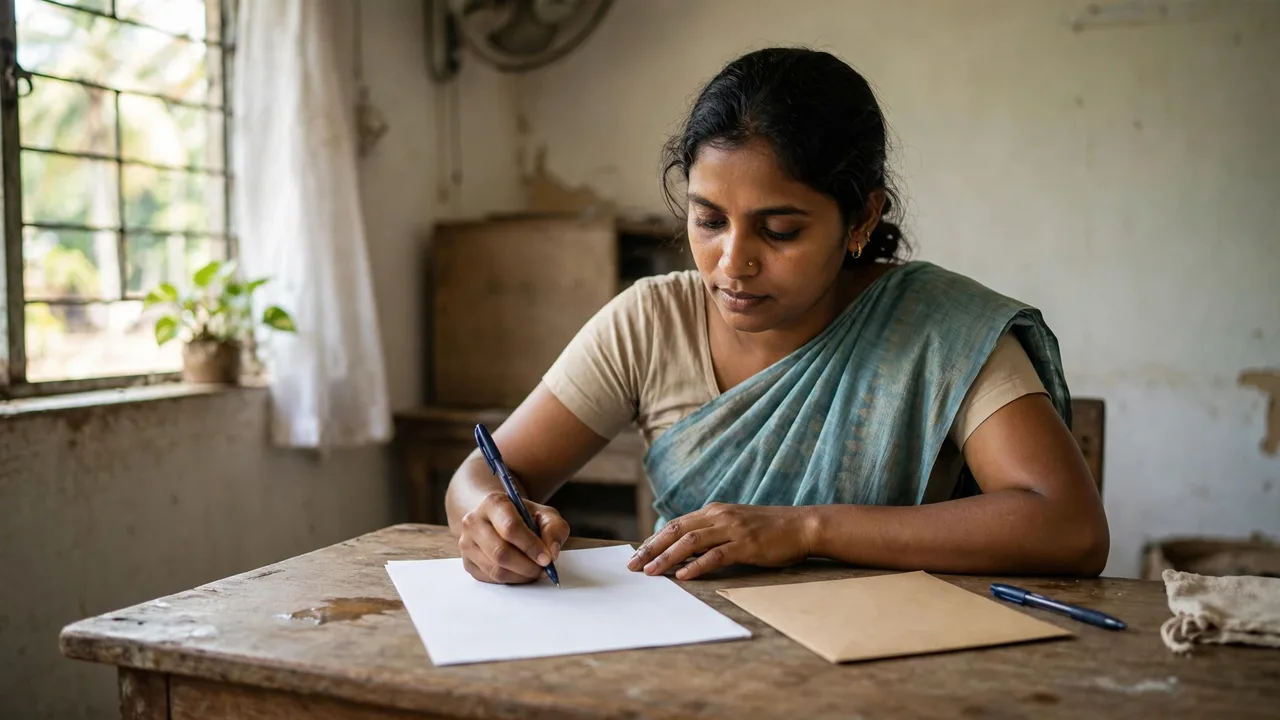
Few things sting like a list that leaves you out. Your neighbours' names are there; yours is not — and your hardships feel no smaller than theirs. Before anger hardens into a rushed appeal, breathe. The appeal system exists for families the data got wrong — but each applicant gets a single appeal. Spend that one chance well.
An appeal is not a complaint letter. It is a correction of the record — a chance to show the information used to score your household was incomplete or wrong. Treat it that way — calmly, with facts — and you give the reviewers something to act on.
31 October 2026: the first list is out — and the appeal window is already running
Update, 12 November 2026: the deadline has moved. The Welfare Benefits Board announced on 11 November that appeals and objections on this list now close on 15 November 2026, not 11 November. As of 11 November, 143,805 appeals and 6,478 objections had been recorded. From 12 to 15 November, file online only through WBB eServices (eservices.wbb.gov.lk); Divisional Secretariat offices accepted in-person filings until 11 November and can help with questions, and 1924 answers questions by phone. You still get only one appeal, so check your record carefully before you file.
On 28 October 2026 the Welfare Benefits Board published the first updated Aswesuma list, built from information updated to 27 October 2026: 991,800 families eligible — 363,142 Extremely Poor at Rs 17,500 a month and 628,658 Poor at Rs 10,000 — and 1,391,830 families shown as not eligible. If your name is missing from this list and you believe your household qualifies, the appeal window for this list runs from 29 October to 15 November 2026 — extended from 11 November on 11 November, and from 12 November filings are online only through WBB eServices. No time of day for the 15 November cut-off has been announced, so do not plan to file at the last hour.
Two things this window is not. It is not a new general application round — there is still none officially announced. And it is not a window for the second list: a second updated list is expected in December 2026, built from a further 740,127 families whose information was updated, and no separate appeal window for that list has been announced yet. Letters about bank accounts for newly eligible families are expected from 12 November 2026, with a first payment on 27 November 2026 into an Aswesuma bank account only — but a successful appeal does not by itself promise you a place in that payment round, as the section on after you file explains.
What has not changed is the closed-category rule. The Vulnerable category, which paid Rs 5,000 to about 425,000 households, ended in June 2026, and the Transitional category has closed. If your payment stopped in mid-2026, check which category you were in before you spend your one appeal — an appeal cannot reopen a closed category.
First, double-check before you appeal
First confirm the absence is real. Search the register three ways — browse your Grama Niladhari Division list, search by NIC, open your household record — because names hide under spelling differences and old boundaries. Also check the Phase II lists on WBB eServices — families missed in the first census were listed separately, in rounds.
Then read your household record like an auditor. Is the income right? Is the disabled member recorded? The chronic illness? The children in school? Most failed listings are not conspiracies; they are wrong rows in a huge table — and a wrong row is what an appeal can fix.
What you are actually appealing for
An appeal does not ask the Board to be generous. It asks it to re-score your household correctly against the 22 published selection criteria — the same criteria that built the list. The two surviving categories are Extremely Poor at Rs 17,500 a month and Poor at Rs 10,000 a month, with extra allowances for elderly members over 70, members with a disability, and kidney patients. Your appeal should point at the criteria rows that are wrong, not at the amount you hope for.
That is also why the weights are not something to argue about: the criteria are published, but how each one is weighted is not public, and no checker or agent can honestly predict which category you will land in. A strong appeal is a corrected record — income, household members, disability, illness, schooling — with a document behind every correction.
How to file the appeal
There are three doors. Online: WBB eServices carries a submission page for objections and appeals. On paper: printable forms (Sinhala and Tamil) sit in the downloads section of wbb.gov.lk. In person: your Divisional Secretariat office takes appeals directly.
Content matters more than the channel. Give your Household Reference Number if you have one, and name the facts that are wrong or missing — a member's disability, a death, a lost livelihood, a child out of school — with documents that prove them. Vague hardship is hard to score; corrected facts are not.
File under the right letter: appeals use Forms A and B, objections use Form C — the forms in Sinhala and Tamil are in the downloads section of wbb.gov.lk, and the online form is on WBB eServices.
Appeal or objection — file the right one
An appeal and an objection are different filings, and filing the wrong one wastes effort. An appeal is your own case: your family is missing from the list, or it has been put in the wrong category. It is filed in your name, with your Household Reference Number and your documents. An objection is a public report: you believe a person or family on the list does not qualify. Public objections may be submitted anonymously. Appeals use Forms A and B; objections use Form C. Forms in Sinhala and Tamil sit in the downloads section of wbb.gov.lk, and the online form is on WBB eServices.
One trap to avoid: calling 1924 is not filing. The Welfare Benefits Board hotline answers questions about your listing or an appeal, but a phone call does not count as an appeal, and the head office does not accept appeals or objections sent by post, email or phone. File online, on paper through your Divisional Secretariat, or in person at the Divisional Secretariat — and keep whatever acknowledgement or reference you are given.
Gather your proof before you file
File with a folder, not a feeling. For each fact you say is wrong, attach the paper that proves it: your NIC and Household Reference Number; the disability assessment for a disabled member; clinic cards or medical records for a chronic illness or kidney disease; school letters for children in school; a death certificate where a member has died; and anything that shows a lost livelihood. One document per claim keeps the reviewer moving.
Before you submit, ask your Grama Niladhari to look over the folder. They see these records every day and spot a missing paper in minutes — a far cheaper fix than discovering the gap after your single appeal is already filed.
One appeal only — make it count
There is no second submission to fix a careless first appeal, so do not file until your facts are gathered: the clinic card, the school letter, the disability assessment — whatever proves the wrong rows. Ask your Grama Niladhari to review your record first; they spot missing documents in minutes.
And pay nobody. No agent can strengthen your appeal for a fee, and anyone guaranteeing a result is lying — the decision is made against the same 22 criteria. Your facts are your advocate.
Mistakes that waste the one appeal
The most common waste is filing too early: the name was there all along under a different spelling, or on a Phase II list, and the appeal was spent on a problem that a careful search would have solved. The second is filing on hardship alone — a moving letter about difficult times with no corrected fact and no document gives reviewers nothing to re-score.
The third is paying someone. No agent can strengthen an appeal for a fee, and anyone guaranteeing a result is lying, because the decision is made against the same 22 criteria. And the fourth is appealing a policy change: the June 2026 end of Vulnerable payments hit every household in that category, and no individual appeal reverses it.
After you file — what nobody can promise
No decision date for these appeals has been announced, and no source publishes an acknowledgement or tracking system for them — so if you are given a reference when you file, keep it safe, and do not trust anyone who names a date for your result. A successful appeal earns your record a fresh, correct scoring against the same 22 criteria; it does not promise a place on the list, and it does not by itself promise payment on 27 November 2026 or inclusion in the December second list. Nobody has announced either of those links, so anyone selling you one is guessing.
The same honesty applies to second thoughts. No published route lets you correct or add to an appeal after filing, and you get only one appeal per applicant — so the folder you file must be complete: every wrong fact named, every claim backed by its document, reviewed by your Grama Niladhari before you submit. If your household facts change again after you file, no announced process covers that either; keep the new document ready and ask the Divisional Secretariat what route, if any, applies — do not assume a second appeal exists.